
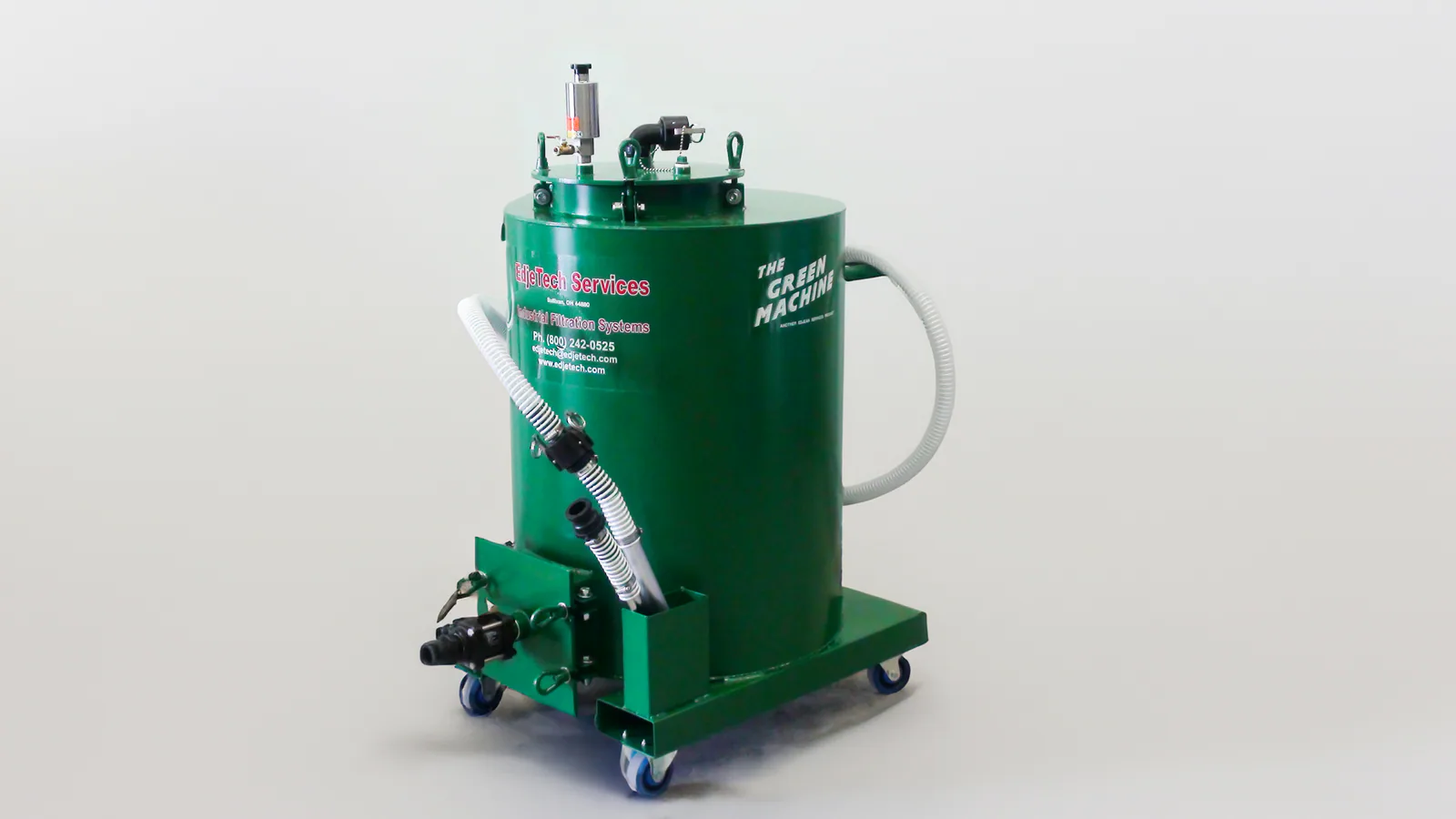
Why CNC coolant sumps need planned cleaning
A machine sump collects more than coolant. Chips, grinding fines, sludge, leaked lubricant, and other process contamination can settle or accumulate in areas that normal circulation does not clear.
Filtration and tramp-oil separation help control contamination while the system operates, but they do not eliminate every deposit from the reservoir. Periodic physical cleaning may still be necessary when settled material restricts capacity, interferes with pumps or return paths, contributes to recurring fluid problems, or prevents an adequate inspection.
Cleaning frequency should be based on condition and the facility's maintenance program. Relevant indicators can include:
- Visible sludge or chips accumulating in low areas of the sump.
- Restricted screens, pump inlets, nozzles, or return passages.
- Recurring odor, oil films, or contamination that returns after routine treatment.
- Coolant condition that requires transfer for recycling, correction, or approved disposal.
- A planned machine service event that provides safe access for inspection and cleaning.
These symptoms do not identify one cause by themselves. Concentration, water quality, fluid chemistry, leakage, filtration, bacterial control, and machine condition may also require review.
Benefits of portable sump vacuum cleaning
A purpose-built sump cleaner combines fluid removal, solids collection, filtration, and controlled transfer in one portable unit. The result can be a more consistent maintenance process with fewer temporary handling steps.
- Controlled fluid transfer: compatible hose, tank, and discharge arrangements keep the transfer path defined from the sump to the selected destination.
- Removal of settled material: pickup tools, a chip basket, and filter media help collect coarse chips, fines, sludge, and other suspended material during service.
- Reduced manual handling: vacuum and pressure or gravity discharge can replace repeated use of small pumps, buckets, or temporary containers.
- Better access for inspection: removing fluid and deposits allows authorized personnel to inspect the sump, screens, return paths, and accessible components under the facility's safe-work procedure.
- Defined transfer destination: fluid can be directed to a recycling station, holding tank, approved waste container, or another destination confirmed for the application.
- Refill during the same service visit: a dual-tank configuration can carry clean coolant separately when removal and refill are part of the planned work.
Actual service time depends on sump volume, solids loading, access, tank capacity, hose routing, filter condition, transfer distance, cleaning scope, and the facility's isolation and restart procedures. A single time estimate should not be applied to every machine.
Sump vacuum versus a general wet/dry or shop vacuum
A general wet/dry or shop vacuum may be rated for some liquid-pickup tasks, but that rating does not establish that it fits a coolant sump. Compare the equipment manufacturer's instructions with the actual fluid, solids, volume, filtration, tank, and discharge requirements before use.
| Selection question | Purpose-built sump vacuum | General wet/dry or shop vacuum |
|---|---|---|
| Intended duty | Configured for compatible coolant transfer and sump-cleaning work within the unit's stated limits. | Intended duties vary. Confirm that the manufacturer permits the specific liquid, temperature, contamination, and operating environment. |
| Solids and filtration | May include a chip basket and selectable filter media for the expected chips, fines, and sludge. | Filter and debris-handling arrangements vary and may not match the sump's solids load. |
| Transfer and discharge | Can be configured around the required tank capacity, hose route, and compatible discharge destination. | Tank capacity and discharge method may require additional handling steps. |
Do not use either equipment type with a fluid, hazard, or environment outside the manufacturer's rating.
Plan the sump-cleaning work before transfer begins
- Define the duty: confirm the sump volume, fluid, contaminants, expected solids, access, refill plan, and transfer destination.
- Authorize the work: complete the facility's hazard review, isolation, personal-protective-equipment, spill-control, and waste requirements.
- Verify the equipment: check compatibility, tank capacity, hoses, fittings, filters, chip collection, controls, utilities, and overfill protection against the equipment manual.
- Secure the route: position the unit, hoses, and compatible receiving vessel so the planned transfer can be completed safely.
- Complete and document the service: remove fluid and accessible deposits within equipment limits, inspect authorized areas, manage each output as approved, then complete the refill and restart checks.
The equipment manual and site procedures control the work. This checklist identifies the decisions that should be settled before the sump is opened and fluid is moved.
Decide whether the fluid is reused, recycled, or removed
Filtering fluid during sump cleaning does not automatically make it suitable for immediate reuse. The fluid's condition and destination must be evaluated separately.
| Potential destination | Questions to confirm | Relevant EdjeTech role |
|---|---|---|
| Return to the machine | Is the coolant still within the supplier's acceptable condition and concentration? Were only compatible contaminants and solids removed? Has refill concentration been checked? | The Green Machine can filter during transfer, but the facility and fluid supplier determine whether the coolant remains suitable for service. |
| Central recycling | Does the fluid require tramp-oil separation, particulate control, properly proportioned makeup coolant, and storage before reuse across multiple machines? | A compatible sump cleaner can transfer dirty coolant to the facility's selected recycling system. The recycling equipment performs the treatment. |
| Approved holding or disposal | How is the fluid classified, what testing or manifesting is required, and which container and service provider are approved? | The sump cleaner can transfer fluid to the designated container. Waste classification and disposal remain subject to facility procedures and applicable requirements. |
Keep records of the machine, fluid, concentration, observed contamination, filter condition, removed solids, destination, and refill. Those records help identify recurring leaks, abnormal solids loading, and changes in cleaning frequency.
What sump vacuum cleaning cannot correct
Sump cleaning is one maintenance function. It does not replace fluid analysis, source control, continuous separation, or a recycling system when those functions are required.
- It does not repair contamination sources. Hydraulic, way-oil, or machine leaks should be corrected where practical.
- It does not break chemical emulsions. A bag filter and chip basket remove solids, not foreign oil held in solution by emulsifiers.
- It does not restore depleted coolant chemistry. Concentration, pH, additives, microbial condition, and supplier limits require separate evaluation.
- It does not provide continuous tramp-oil control. That requires compatible oil-removal equipment selected for the fluid and operating conditions.
- It does not provide shop-wide coolant recycling by itself. That requires a central system selected for the fluid, contaminants, capacity, treatment, storage, and return requirements.
- It is not automatically suitable for every fluid or hazard class. Straight oils, unusual viscosity or temperature, flammable material, hazardous contamination, or special machine access require application and safety review.
Determine whether purpose-built sump equipment fits
Selection should account for the complete service route, not only the sump capacity.
- Record the sump volumes, available aisle width, access height, and required pickup reach.
- Describe the fluid, temperature, viscosity, chips, fines, sludge, surface oil, and unusual contamination.
- Confirm the required tank capacity, solids handling, filtration, utilities, hose route, and compatible discharge destination.
- Define whether the work includes removal only, filtered transfer, or a separate clean-coolant refill step.
The Green Machine product page covers EdjeTech's portable sump-cleaning configurations. Continuous sump-side tramp-oil control belongs to T.O.S.S., while shared recycling across compatible machines belongs to C.R.O.S.S. Those are separate operating duties from physical sump cleaning.