
Remove ferrous fines and abrasive grit.
Grinding releases fine metallic particulate from the workpiece and abrasive grit from the wheel. Ferrous grinding commonly combines magnetic separation with paper-bed filtration, while non-ferrous applications rely on media selected for the particulate and finish requirement.
Magnetic separation operates first so paper-bed media captures only the particulate the magnet cannot remove. Add C.R.O.S.S. when tramp oil, coolant degradation, consumption, and disposal also require control.
Fine metal and abrasive grit require separate capture methods
Grinding swarf can remain suspended in coolant rather than settling for removal by a conveyor or sump magnet. Ferrous and mixed-material operations use magnetic and fabric filtration as required by the metal and abrasive loads.
| Contaminant load | Captured by | Filtration detail |
|---|---|---|
| Steel & cast iron finesMost grinding swarf is ferrous metal off the part, fine enough to stay suspended in the coolant. | Magnetic separator | 98% removal · runs first, no media |
| Abrasive grit & non-ferrous finesGrit off the wheel, plus any aluminum or brass, passes straight through a magnet. | Paper bed filter | 10 to 60 micron · by fabric grade |
Recirculated fines reach the work zone.
Fines left in the coolant cycle back through the cut and mar the surface finish. Removing them upstream is what protects the finish, the fluid, and the wheel.- Surface finish
- Improves
- Coolant life
- Extended
- Tool life
- Extended
Match each filtration stage to the contaminant load
A magnetic separator captures ferrous fines, while a paper bed captures abrasive grit and non-ferrous particulate. The DCO Combination Filter integrates both stages for ferrous and mixed-material applications. Add C.R.O.S.S. when the application also requires tramp-oil removal, concentration control, and coolant recycling.
- FERROUS-FINES SEPARATION
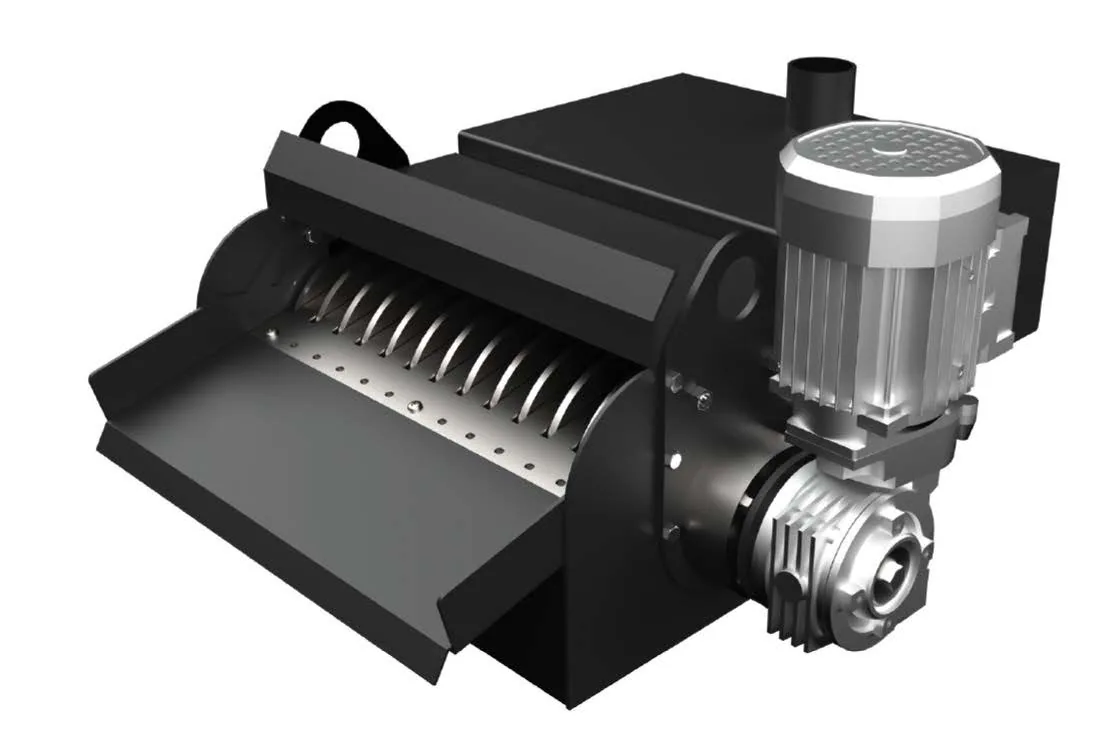
Magnetic separator
Continuous ferrous-fines removalRotating magnetic discs capture ferrous fines a quarter inch and smaller; a scraper clears them; clean fluid flows out by gravity. No filter media to replace.
- 98%
- Ferrous removal
- 13–396 gpm
- 11 models
- ABRASIVE GRIT AND REMAINING PARTICULATE
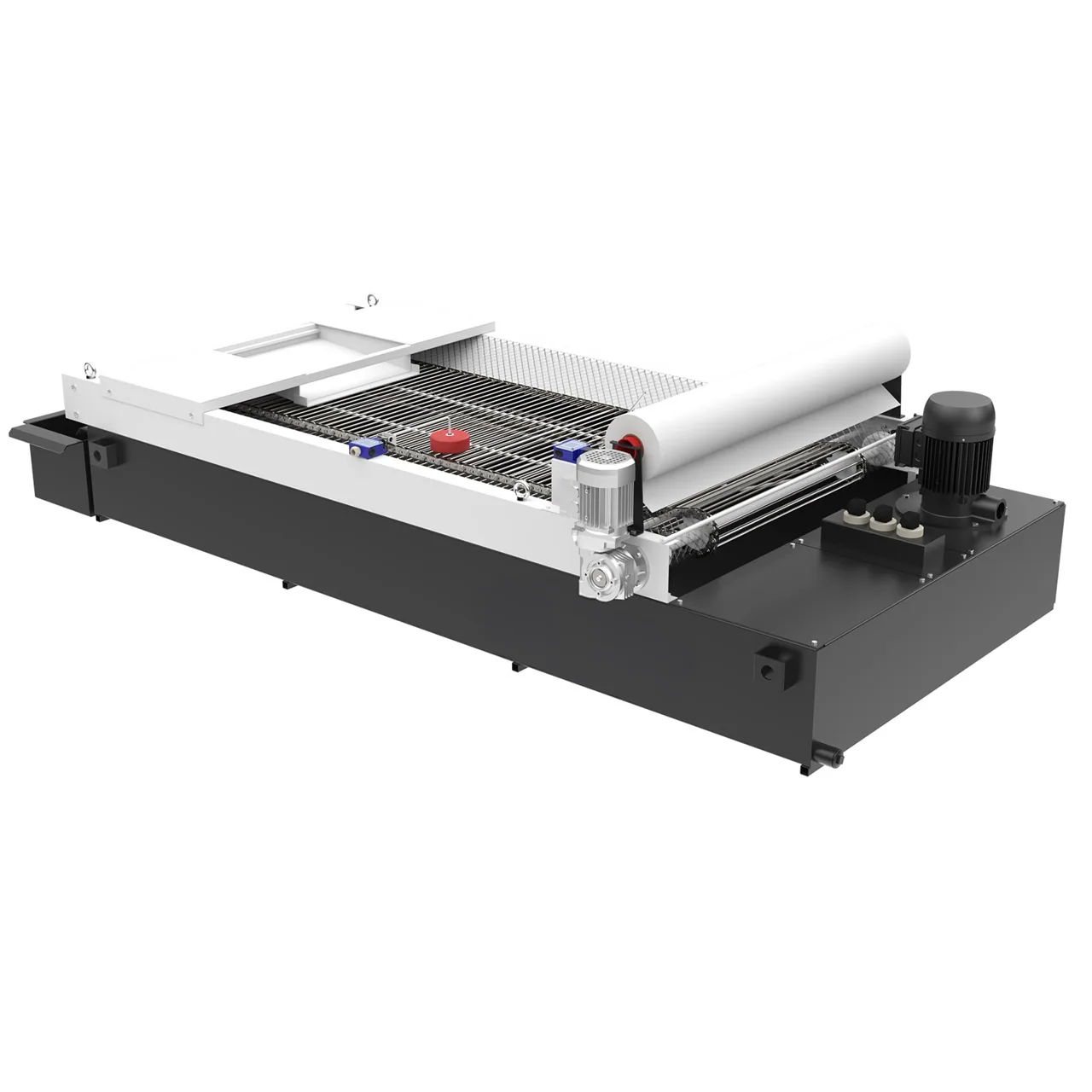
Paper bed filter
Abrasive grit and non-ferrous finesDirty fluid crosses a disposable fabric that advances itself; the fabric grade sets the rating, changeable per application. It catches what the magnet cannot hold.
- 10–60 µm
- By fabric grade
- 13–132 gpm
- Gravity bed
- INTEGRATED TWO-STAGE FILTRATION
DCO Combination Filter
Integrated magnetic and paper-bed filtrationMagnetic separation and paper-bed filtration are integrated in one system. The magnet operates first so the fabric handles only the remaining particulate.
- 2
- stages, magnet first
- 98%
- Ferrous removal
- BROADER COOLANT MANAGEMENT
C.R.O.S.S.
Tramp-oil removal and coolant recoveryParticle filtration does not remove tramp oil or control coolant concentration. C.R.O.S.S. adds contaminant separation, concentration control, and coolant recovery when fluid quality is the broader operating concern.
- 99.75%
- Tramp oil & particulate removed, by volume
- 2–25 gpm
- Machine-shop coolant recycling
The proportion of ferrous fines, abrasive grit, and non-ferrous metal determines the required filtration stages. An engineer can review the process and recommend the appropriate configuration.
Configure filtration for the grinding process
Required flow, contaminant load, operating frequency, and surface-finish requirements vary by grinding process.
- CenterlessContinuous through-feed
Continuous cutting produces a steady fines load while coolant circulates through the work zone. Evaluate magnetic separation followed by paper-bed filtration, sized to the machine's required flow. An engineer selects the fabric grade for the process requirements.
- Surface & gearFerrous-dominant
Intermittent passes on surface work, hardened-steel fines on gear work. Both are ferrous-dominant loads, where the magnet is the lead stage and the fabric grade is selected against the finish specification.
- Toolroom & small grindersSingle machine
The smallest gravity bed handles 13 GPM on a 49-gallon tank, and custom sizing is available below that. Low-duty installations are sized by an engineer.
See the paper bed line →- Carbide & lappingApplication review
Carbide swarf and polishing media require application-specific filtration. Provide the material, fluid, particulate profile, and required finish for equipment selection.
Talk to an engineer →- Titanium & nickel alloyMaterial-specific review
Titanium and nickel-alloy grinding adds material-handling and regulatory considerations to the fine-particulate load.
Aerospace coolant filtration →
Sizing beyond a single grinder
Size magnetic and paper-bed filtration to the grinder's required coolant flow and contaminant load. C.R.O.S.S. provides shop-wide coolant recycling where fluid quality and consumption require broader control.
- 2–25 gpm
- C.R.O.S.S. machine-shop coolant recycling for grinding operations.
- Central / batch / hybrid
- Coolant transfer is configured separately from filtration capacity.
Common grinding filtration questions
- 01
Magnetic separator or paper bed for grinding swarf?
Ferrous grinding commonly uses both, in that order. The magnet removes steel and cast-iron fines without disposable media, while the paper bed captures abrasive grit and remaining particulate. Non-ferrous work relies on paper-bed media or another application-specific filtration method. The DCO Combination Filter integrates magnetic and paper-bed stages.
See the DCO combination filter → - 02
What micron rating does the process require?
Paper-bed fabric is available in grades from 10 to 60 microns and can be changed by application. The required rating depends on the coolant, grinding wheel, and surface-finish specification. An engineer selects the fabric grade for the application.
Talk to an engineer → - 03
Can magnetic and paper-bed filtration be integrated?
Yes. The DCO Combination Filter integrates a magnetic separator and paper bed in one system. Magnetic separation operates first so the fabric captures only the remaining particulate. Both stages can be included in one quotation request.
See the DCO combination filter → - 04
How can frequent grinding-sludge cleanouts be reduced?
Continuous filtration captures fines before they settle, while a sump cleaner removes accumulated sludge with less manual labor and downtime.
Sump cleaning →
Keep grinding fines away from the workpiece
Remove recirculating swarf and abrasive grit that can interfere with the finish you need to achieve.
- Equipment guidance
Talk to an engineer
Keep swarf and grit from compromising your grinding finish.
Talk to an engineer → - Integrated two-stage filtration
DCO combination filter
Magnetic separation and paper-bed filtration in one system, with magnetic separation first.
View the DCO → - Integrated quotation
Request a quote
Control recirculating fines to support the finish your grinding requires.
Request a quote → - Coolant recovery
C.R.O.S.S. recycling
Add shop-wide recovery when tramp oil, coolant life, consumption, and disposal also require control.
View C.R.O.S.S. →