
Keep mill fluid clean and in circulation.
Fine solids and foreign oil can increase maintenance, compromise fluid condition, and place production continuity at risk. TMCRS continuously removes the contaminants it is configured to handle and returns clean fluid at the flow required by the selected water-based mill-fluid circuit.
- 990 GPM
- Systems have processed up to this flow and can scale to 1,600 GPM or more
- 99.75%
- Particulate and tramp oil removed, by volume
- ≤2%
- Water in recovered oil
- 99% or greater
- System uptime
Control contamination in the recirculating fluid
The selected water-based circuit determines which contaminants must be removed, which fluid properties must be maintained, and how much clean fluid must be returned to production.
- 01
Fine ferrous particulate
Metal fines can remain suspended after bulk solids are removed and continue circulating through the fluid system.
- 02
Non-magnetic particulate
Non-magnetic solids require a filtration stage selected for the actual material, particle size, and loading.
- 03
Foreign oil
Hydraulic and lubricating oils can enter compatible water-based circuits as free or mechanically dispersed tramp oil.
- 04
Fluid condition
Cleanliness, concentration, chemistry, and temperature must remain within the operating requirements of the selected circuit.
- 05
Continuous flow demand
Filtration and clean-fluid return must keep pace with normal and peak circuit flow without limiting production.
Configured for a specific fluid circuit
Steel plants use different fluid circuits for cooling, lubrication, scale removal, and water management. TMCRS is engineered for recirculating water-based mill-fluid circuits, with each system configured around the fluid chemistry, contaminants, return condition, and required flow.
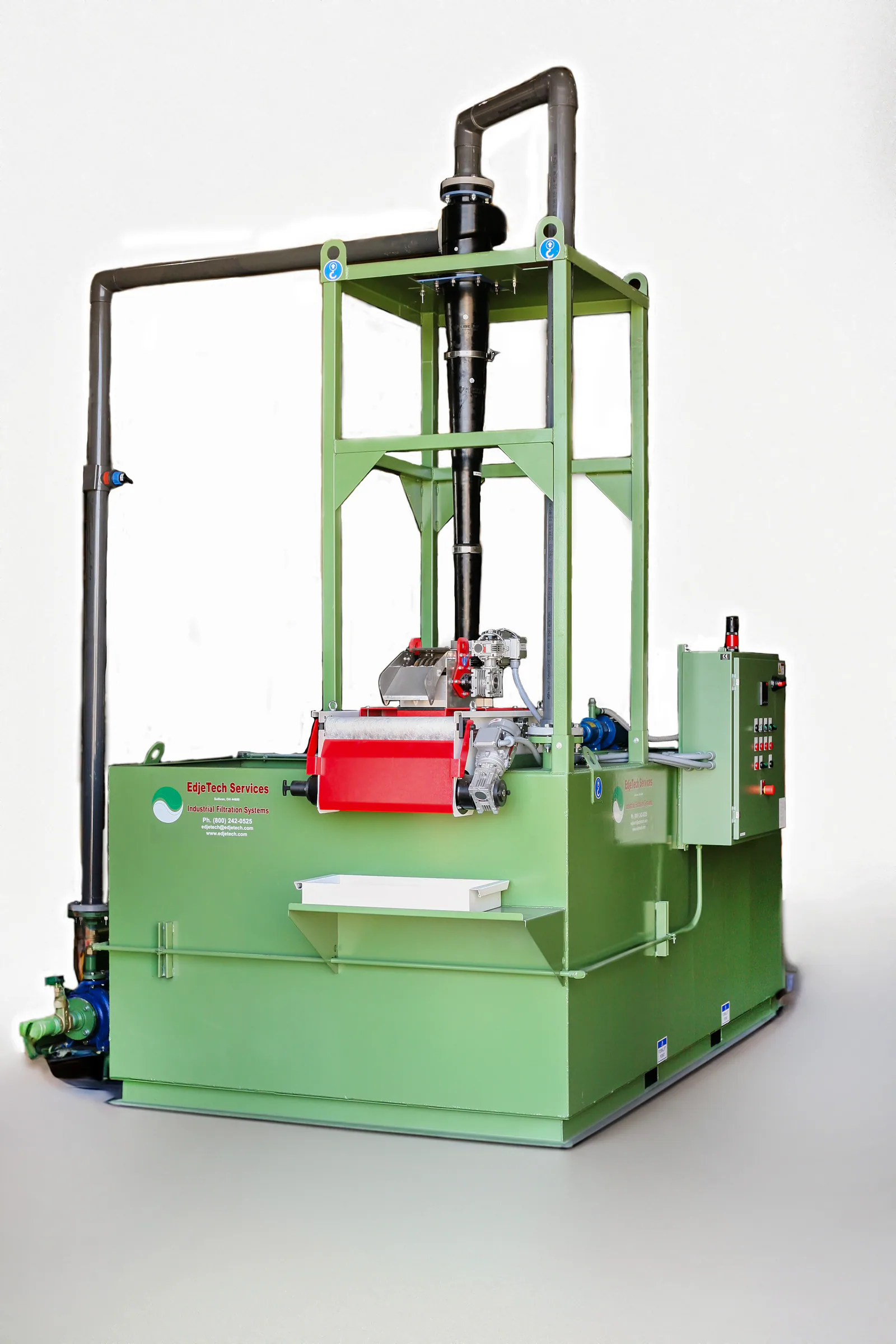 TMCRS full system
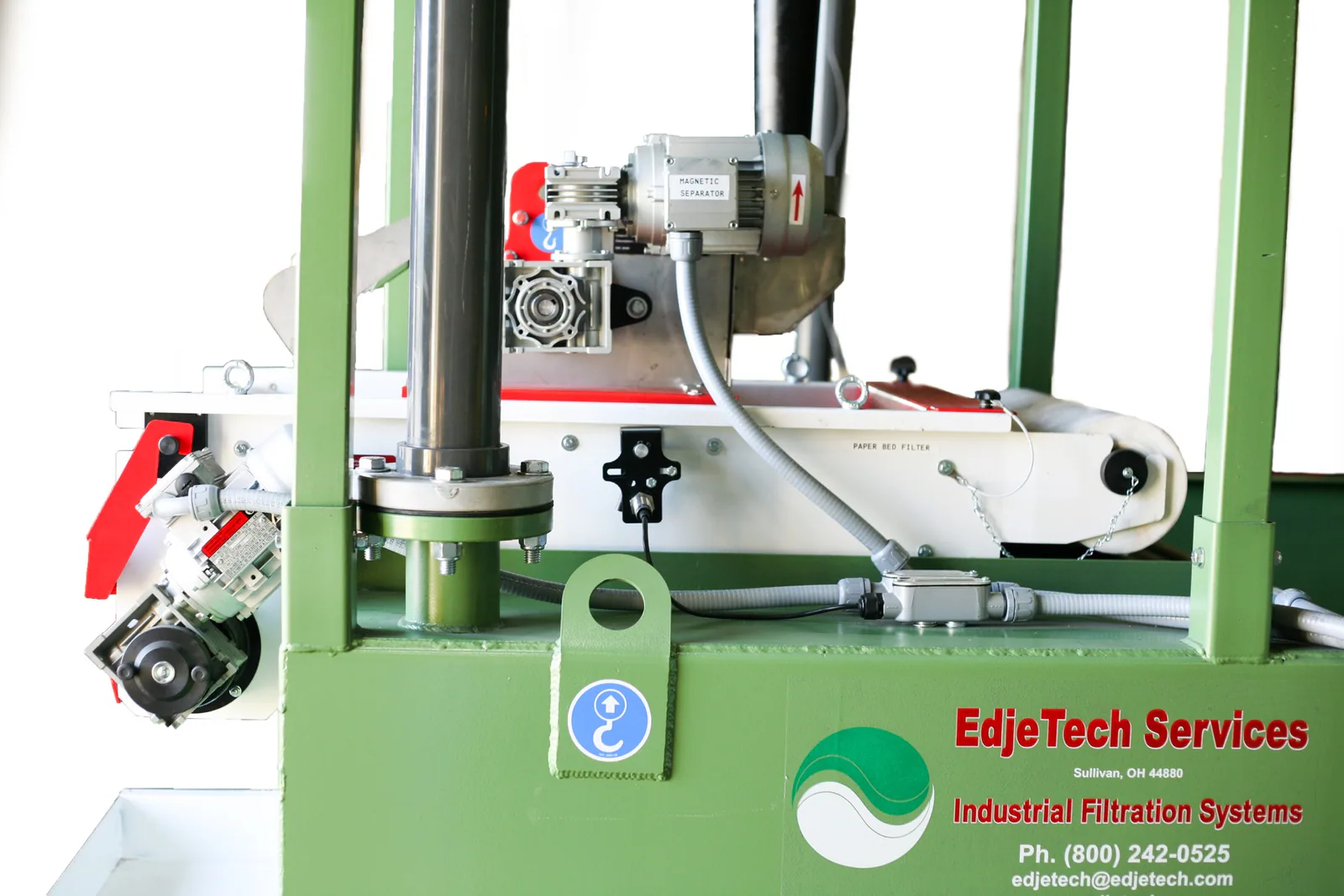 Configured solids removal
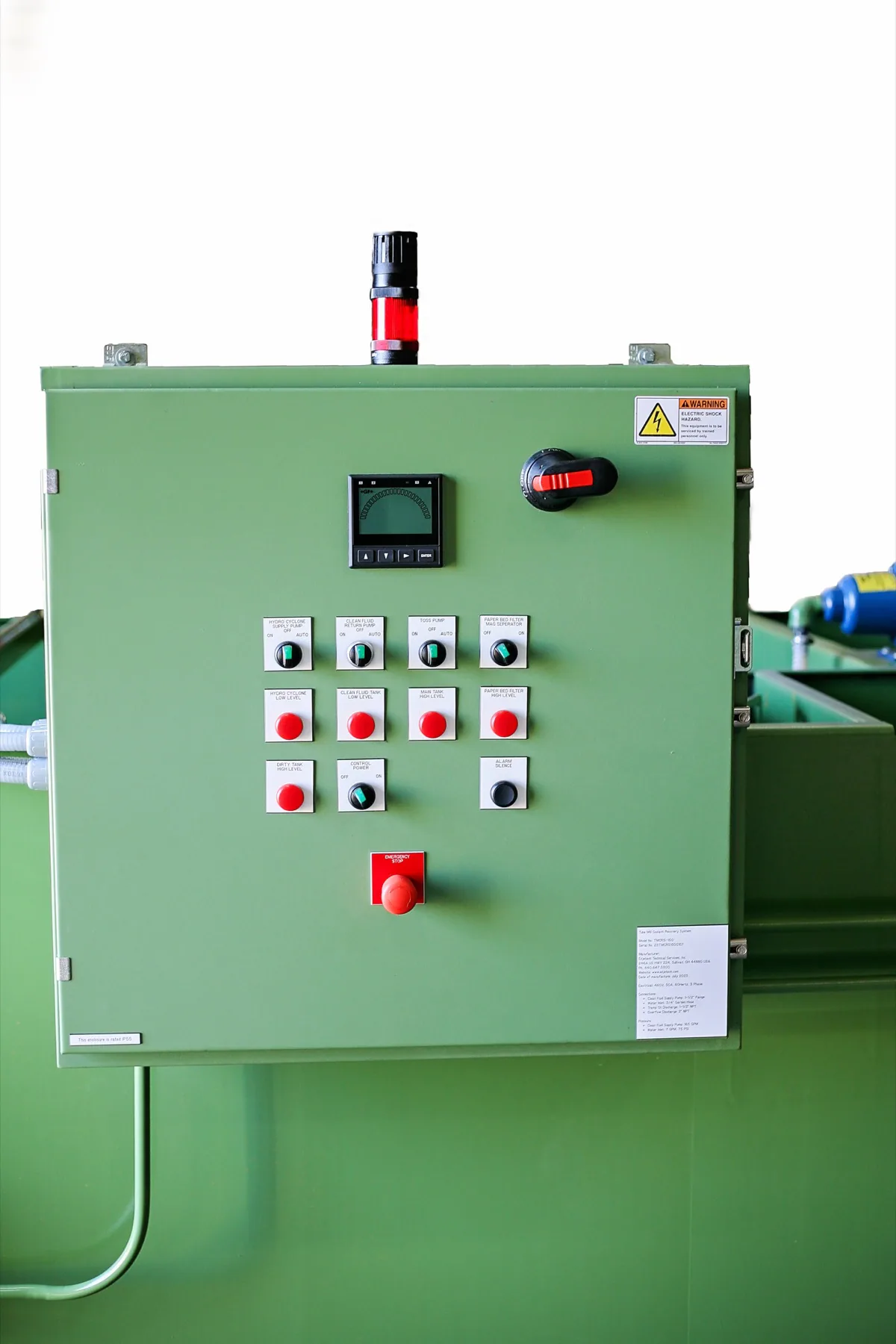 Automatic controls
How TMCRS conditions mill fluid
TMCRS combines the separation and conditioning stages needed to remove applicable contaminants and return fluid in the condition required by the mill.
| System function | How it works | Operating result |
|---|---|---|
| Remove fine ferrous material | Magnetic separation can be configured for the fine ferrous particulate remaining after the circuit's bulk-solids management. | Less fine ferrous material recirculates with the fluid. |
| Capture remaining particulate | Paper-bed filtration is selected for the actual particle size, material mix, and loading. | Ferrous and non-ferrous fines are captured before clean-fluid return. |
| Separate foreign oil | Integrated oil separation removes free and mechanically dispersed hydraulic and lubricating oil from the recirculating water-based mill fluid. | Foreign oil is separated from the working fluid, with 2% water or less in the recovered oil. |
| Maintain concentration | The proportioner automatically mixes water and concentrate at the required concentration. | Make-up coolant is prepared at the correct concentration for use. |
| Return clean fluid | Pumps, tanks, controls, and filtration capacity are engineered around the selected circuit's required flow. | Clean fluid remains available to the circuit during production. |
| Control final fluid condition | Post-filtration, heat exchange, and cooling equipment can be configured where required. | Return-fluid cleanliness and temperature are matched to the selected circuit. |
Fluid distinction: In an emulsion-based rolling application, the working emulsion remains in circulation while free and mechanically dispersed hydraulic and lubricating oils are separated as foreign oil.
Review TMCRS filtration stages and configurationReal-time recovery at mill flow
- 990 GPM
- Systems have processed up to this flow.
- 1,600+ GPM
- Systems can scale to 1,600 GPM or more.
- 99.75%
- Particulate and tramp oil removed by volume.
- 99% or greater
- System uptime during automatic operation.
- Up to 85%
- Reduction in new-fluid purchases.
- Up to 90%
- Reduction in disposal costs.
Published figures describe TMCRS performance and potential savings. Final configuration and results depend on the selected circuit, fluid chemistry, contaminant loading, flow, operating practices, and disposal requirements. Potential reclamation or reuse of recovered oil depends on composition, waste classification, and the receiving facility's requirements.
TMCRS in steel-mill fluid circuits
- 01
Where does TMCRS fit within a steel plant?
TMCRS serves recirculating water-based mill-fluid circuits that require real-time filtration and clean-fluid return at production flow. Each system is configured around the fluid chemistry, contaminants, temperature, and return requirements of that circuit.
- 02
How does TMCRS integrate with existing water-treatment equipment?
TMCRS can be configured to work with existing pits, bulk-solids equipment, tanks, pumps, cooling, controls, and other plant water-treatment assets. Connection points and equipment interfaces are determined for the specific mill-fluid circuit.
- 03
How are mill scale and other particulate handled?
Coarse or heavy material and fine particulate are different separation duties. EdjeTech reviews upstream bulk-solids handling, particle size, material mix, and loading before configuring magnetic and paper-bed filtration for the remaining fine-particle duty.
- 04
Can TMCRS separate tramp oil from a rolling emulsion?
Yes. The intended working emulsion remains in circulation while TMCRS separates free and mechanically dispersed hydraulic and lubricating oils as foreign oil.
- 05
Why must filtration capacity match the mill-fluid circuit?
The recovery system must process fluid without restricting the flow required by production. TMCRS is engineered around the selected circuit's normal and peak flow, fluid condition, and contaminant load. Systems have processed up to 990 GPM and can scale to 1,600 GPM or more.
Keep fluid recovery aligned with mill production
Remove fine solids and tramp oil from your water-based mill circuit while keeping clean fluid available for production.