
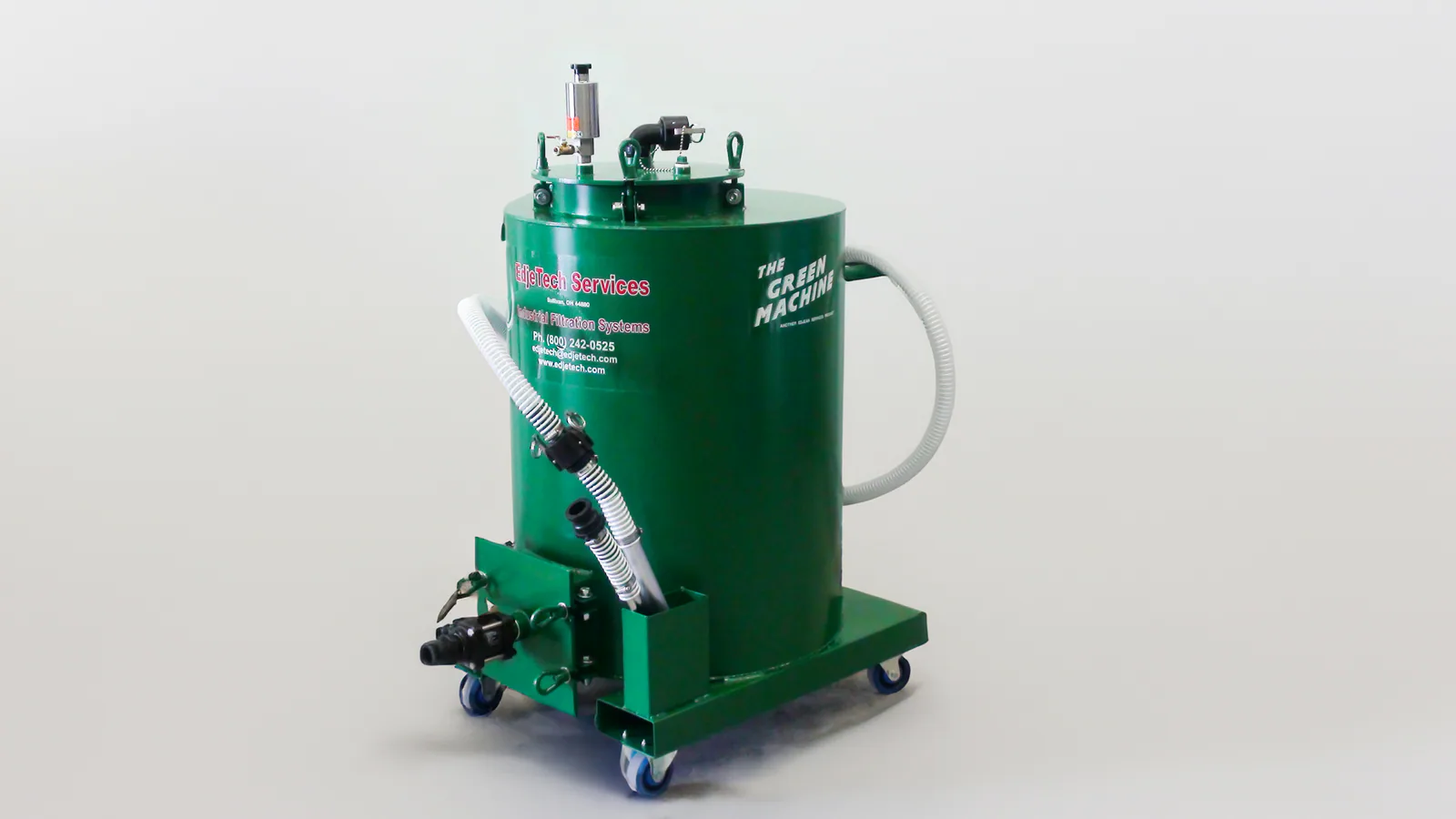
 19 CFM · shop air, no motor50–200µ · bag filtration during intake55–70 GPM · vacuum rate
Batch coolant recycling
without central
piping.
A portable sump cleaner transfers dirty coolant from individual machine sumps to C.R.O.S.S. Clean coolant remains available for immediate use 24/7/365.
- up to85%
- reduction in new fluid purchases
- up to90%
- reduction in waste disposal
- Approx. 15 min
- typical sump cleaning · compared with about 4 hours manually
- No trenching
- no central coolant piping required
Batch recycling does not require central coolant piping
One C.R.O.S.S. can serve multiple machine sumps without a central piping installation. A portable transfer unit collects dirty coolant and delivers it to the system. Clean coolant is drawn from the system as needed.
- Portable dirty-coolant collectionThe Green Machine or another compatible unit collects coolant along with swarf, chips, and sludge, then transfers the coolant to the system.
- Clean-coolant distribution can be addedThe optional Coolant Return System pumps clean coolant through facility piping for distribution across the shop.
- Recycling performance is retainedBoth transfer methods support up to 85% lower new-fluid purchases and up to 90% lower disposal costs.
When batch recycling fits the facility
Batch recycling provides central coolant recovery without installing piping to every machine. An operator moves the transfer unit between machine sumps and C.R.O.S.S. on a planned schedule, combining coolant transfer with required sump-cleaning work while avoiding a facility piping project. Facility layout, machine count, and coolant volume determine the appropriate configuration.
- 01Leased facilities or sites where floor modification is not practical
- 02Machine locations make facility-wide coolant piping impractical
- 03Portable transfer avoids the cost and disruption of facility-wide coolant piping
- 04Coolant recycling is needed before clean-coolant piping is scheduledThe optional CRS supports future clean-coolant distribution.
- 05Facility piping can distribute clean coolant without portable transferCentral configuration →
- 06Central distribution serves the main production cells, while portable transfer serves remote machinesHybrid deployment →
- 07The immediate priority is faster sump cleaning rather than coolant recyclingSump cleaning →
- 08Smaller operations where individual-reservoir equipment better matches the service requirementT.O.S.S. at the sump →
Portable transfer and central coolant recycling
A portable transfer unit collects dirty coolant from the machine sumps. C.R.O.S.S. separates contaminants, stores clean coolant, and prepares it for reuse.
19 CFM AIRGreen MachinePortable coolant collection and transfer
Vacuum collection removes coolant, chips, and sludge from the sump. Bag filtration captures solids during transfer, and the unit discharges directly to C.R.O.S.S. A typical sump cleaning that can require about four labor-hours can be completed by one person in approximately 15 minutes.
- Vacuum rate
- 55–70 GPM, air-powered on 19 CFM of shop air, no electric motor
- Filtration
- 50-to-200-micron bag captures swarf and chips before the fluid reaches the dirty tank
- DTS option
- A second tank carries clean coolant, allowing dirty-coolant removal and clean-coolant refill during the same sump service cycle
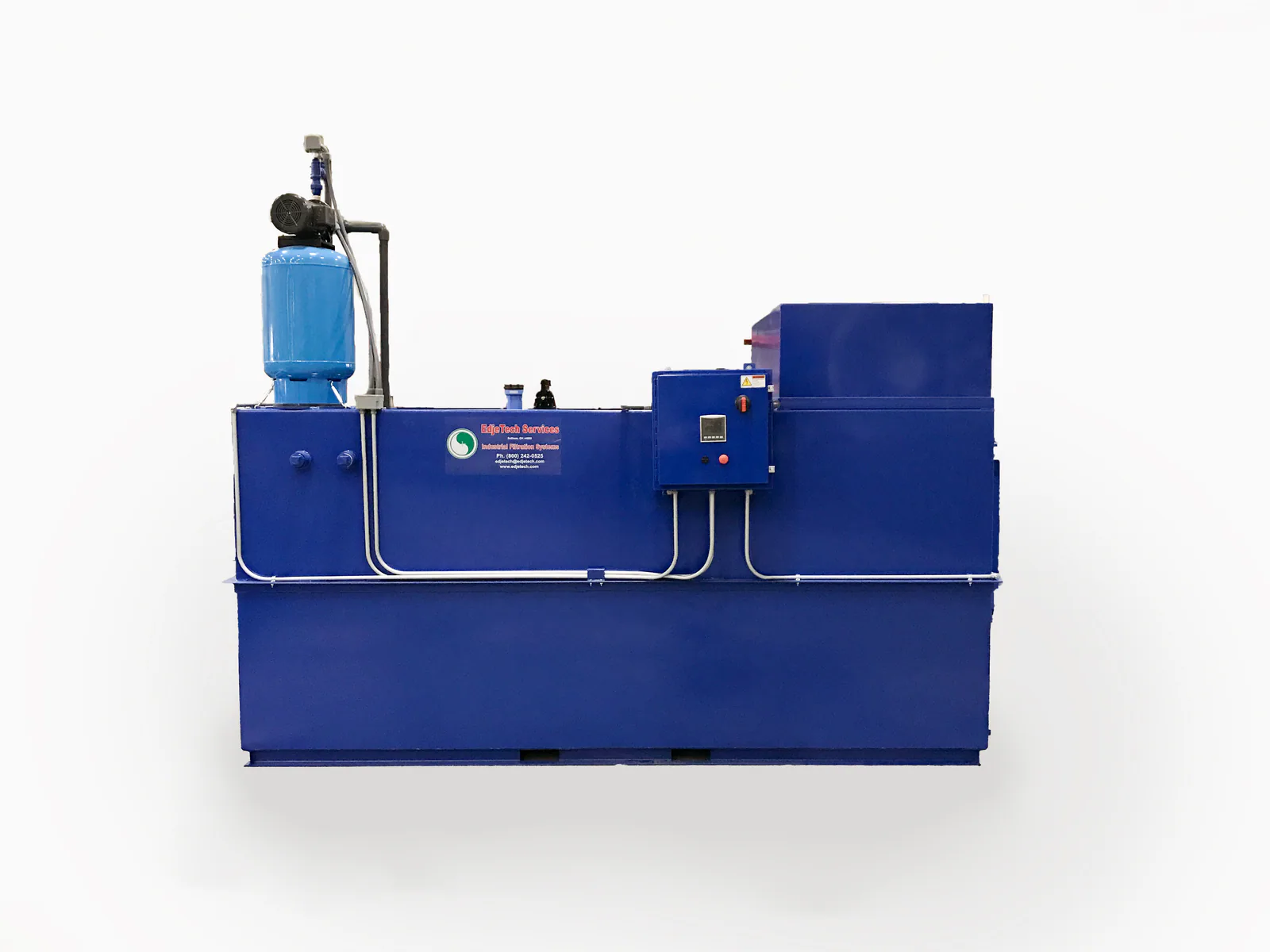
99.75% REMOVEDC.R.O.S.S.Coolant separation, storage, and concentration control
Dirty tank, oil/water separator, clean tank, and coolant proportioner on one self-contained skid. Dirty coolant enters through the dirty-tank inlet coupling. Potential reclamation or reuse of separated oil depends on its composition, waste classification, and recipient requirements.
- Throughput
- 120–1,500 GPH across six models, sized to weekly coolant volume
- Separation
- 99.75% of tramp oil and particulate removed, by volume
- Utilities
- Requires the specified electrical service and city-water connection, with no central piping installation
Compatible transfer equipment can also be used. The Green Machine is the recommended EdjeTech sump cleaner, but another compatible vacuum, transfer tote, or pumping unit can feed the C.R.O.S.S. dirty-tank inlet.
Confirm fit with an engineer →Planned service across multiple machine sumps
Each sump is serviced according to a planned schedule. The system recovers coolant for reuse, reducing new-fluid purchases and disposal volume.
Portable collectionRecycling station- 01
Vacuum the sump
The transfer unit collects coolant along with chips, sludge, and tramp oil. A typical sump cleaning takes approximately 15 minutes.
- 02
Transfer coolant to C.R.O.S.S.
The portable transfer unit moves to C.R.O.S.S. and discharges into the dirty tank through the inlet coupling.
- 03
C.R.O.S.S. removes contaminants
The system processes dirty coolant while maintaining clean coolant for immediate use 24/7/365.
- 04
Return clean coolant
Refill from the clean-coolant outlet. A Green Machine with the DTS configuration can return clean coolant on the same sump visit.
Recovery performance without central piping
Portable transfer changes how coolant moves through the facility, not how C.R.O.S.S. separates contaminants and prepares coolant for reuse.
- New-fluid purchases
- up to85%
- Reduction in new coolant purchases, year over year
- Disposal
- up to90%
- Reduction in waste sent to the hauler
- Labor · batch configuration
- Approx. 15 min
- Typical sump cleaning with the Green Machine, compared with about 4 hours manually
- Coolant transfer · batch configuration
- No trenching
- Portable transfer avoids central coolant piping and floor trenching
Floor space, utilities, and a transfer schedule
- Footprint
- 60 × 42 inThe smallest 250 model (2 GPM). Footprint scales with the model line.
- Electrical & water
- Single or three phaseSingle-phase on the 250 and 450, three-phase on the 850 and up, plus city water for the proportioner.
- Shop air
- 19 CFMThe Green Machine requires 19 CFM of shop air and adequate aisle clearance. Its narrow profile supports movement between machines.
- Transfer schedule
- Planned sump serviceService frequency is based on sump count, coolant volume, and operating conditions.
Planning a batch recycling system
- 01
Is the Green Machine required for batch recycling?
No. Any compatible sump cleaner or pumping unit can feed the system. The Green Machine is the recommended EdjeTech unit because it filters coolant during intake, and the DTS configuration can refill the sump during the same service cycle.
See the Green Machine → - 02
Can clean-coolant distribution be added later?
The Coolant Return System is available within the same model line for clean-coolant distribution. A hybrid configuration can serve the main production cells through piping while portable equipment serves remote machines. If future expansion is planned, EdjeTech can confirm whether the selected unit can accept the Coolant Return System later.
Hybrid deployment → - 03
How many machines can one batch setup cover?
Machine count alone does not determine capacity. Total coolant volume, required processing rate, sump-service frequency, and the model line's 120 to 1,500 GPH range determine how many machines one system can support. For smaller operations, EdjeTech may recommend individual-reservoir equipment instead.
Estimate potential savings →
Recover coolant without piping every machine
Recover fluid from independent sumps and reduce coolant waste without piping every machine to a recycling station.
- Equipment guidance
Talk to an engineer
Fit batch collection and recycling around your existing service routine.
Talk to an engineer → - Savings estimate
Savings calculator
Estimate savings and payback using machine count, coolant purchases, and waste-hauling costs.
Calculate savings → - System sizing
Fit collection into your cleanouts
Coordinate coolant collection with the sump service your crew already does.
Talk to an engineer → - System quotation
Request a quote
Reuse coolant from independent sumps and reduce waste hauling.
Request a quote →