
Tramp oil sources, effects, and removal methods.
Tramp oil enters coolant from way lubricant, hydraulic systems, gearboxes, and spindles. It can form a surface film, reduce oxygen transfer, support bacterial growth, and shorten coolant life. This guide explains the contamination mechanism and the equipment options for removing it.
- Below 0.5%
- tramp oil held by volume, by a coalescing separator
- 99%
- of 20-micron oil droplets removed on the first pass
- 1–2%
- water in recovered oil; disposition depends on site and recipient requirements
- 3 approaches
- portable, dedicated sump-side, and central recycling
Where tramp oil comes from
Tramp oil is foreign oil that leaks into a water-based coolant sump. It enters from machine way lubricant, hydraulic and gearbox leaks, and spindle oil, collects on the surface, and is driven through the fluid by pump turbulence. The longer it stays, the more of it shifts from a free-floating surface layer into dispersed and emulsified oil. How a system removes it depends on which of three forms it has taken.
- Free-floating
- A visible layer on the sump surface. The easiest form to remove, and the only form a simple surface skimmer reaches.
- Mechanically dispersed
- Oil broken into droplets and carried through the fluid by pump turbulence and the churn of the sump.
- Loosely emulsified
- Oil partly bound into the coolant chemistry. It will not rise on its own, and a skimmer leaves it behind.
How tramp oil contributes to coolant odor
A persistent surface film can create low-oxygen conditions that support anaerobic bacteria and coolant odor. Biocide may suppress bacterial growth temporarily, while tramp-oil removal addresses a primary source of contamination.
- Step 01
A surface film forms
Accumulated tramp oil can spread across the coolant surface and limit contact with the air.
→ - Step 02
Oxygen transfer declines
A persistent surface film can reduce oxygen transfer, especially when the fluid is also stagnant.
→ - Step 03
Bacterial growth is supported
Low-oxygen conditions can support bacterial activity associated with coolant odor and degradation.
→ - Step 04
Odor and pH decline
Bacterial activity can produce odor and acids. Growth can return when the contamination and low-oxygen conditions remain.
Tramp-oil removal reduces the conditions that support bacterial growth. Controlling the oil, particulate, and coolant concentration helps prevent recurring odor, pH decline, and premature change-outs.
Fluid life
Tramp oil and bacterial growth can contribute to premature coolant degradation and unnecessary change-outs.
Tool life
Oil-loaded coolant and recirculated fines can affect cooling, lubrication, and tool performance at the cut.
Surface finish
Contaminated fluid and restricted nozzles can contribute to inconsistent finish and rejected parts.
Disposal volume
Early change-outs mean more spent coolant pumped out and hauled away, billed by volume.
How to remove oil from coolants
Select the equipment according to the number of reservoirs, contamination load, required flow rate, and whether the coolant problem is isolated or shop-wide.
- 01
Portable separator
One sump · intermittent oil loading · portable deploymentA skid-mounted coalescing unit that moves between individual sumps and reservoirs and treats one at a time. It provides the same coalescing separation as the full series at 2 GPM on shop air.
T.O.S.S. T12 GPM · on air · portableView the T1 → - 02
Dedicated sump-side separator
A reservoir or pit · continuous oil load · dedicated treatmentA permanent coalescing separator that skims a sump, parts washer, or coolant pit continuously, filters solids, and coalesces oil, returning clarified fluid with tramp oil held below half of one percent by volume. Recovered oil leaves at 1 to 2 percent water and may be suitable for reclamation or reuse, subject to its composition, waste classification, and recipient requirements.
T.O.S.S.2–50 GPM · 7 sizesView T.O.S.S. → - 03
System-level recycling
Tramp oil is one symptom of a shop-wide fluid problemWhen tramp oil, particulate, concentration drift, and short coolant life affect multiple machines, C.R.O.S.S. provides a central recycling station. It removes 99.75% of tramp oil and particulate by volume, uses automatic replenishment to mix coolant at the required concentration, and maintains clean coolant for immediate use 24/7/365. It can reduce new-fluid purchases by up to 85% and disposal costs by up to 90%.
C.R.O.S.S.Central recycling · optional clean-coolant CRSView C.R.O.S.S. →
Top suction describes the collection point; coalescing describes the separation stage. A surface pickup draws oil-rich fluid from the upper layer. If treatment stops at collection or solids filtration, mechanically dispersed droplets can remain in circulation. Coalescing media combines smaller droplets so they separate by gravity, holding tramp oil below 0.5% by volume. Coalesced oil contains 1% to 2% water, compared with 30% or more for typical skimmed oil, which can improve reclamation value and reduce disposal volume.
How oil coalescers work
The coalescing pack is the working core of the T.O.S.S. separation stage. It combines small oil droplets into larger drops that can rise and separate by gravity.
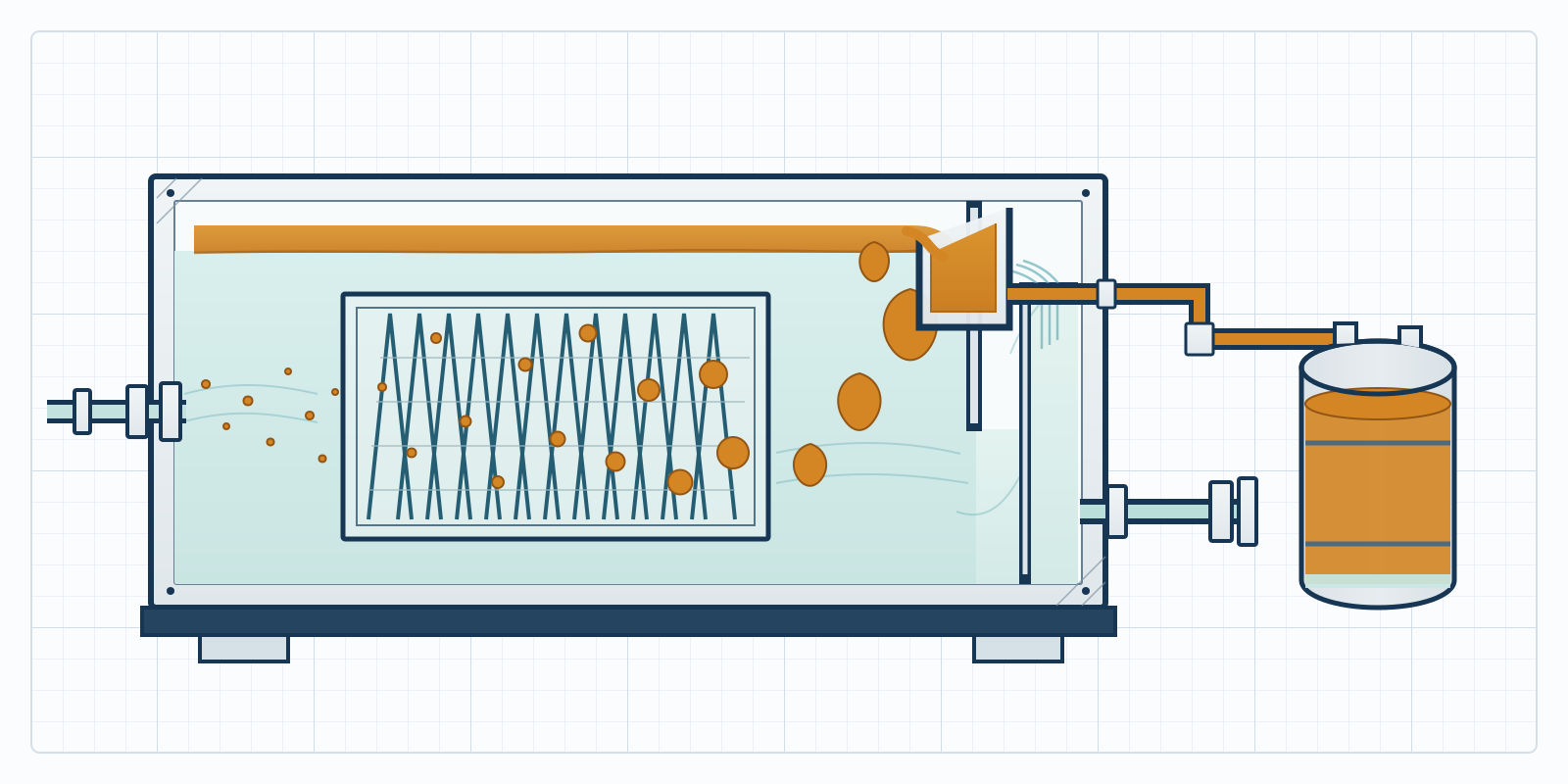
- 01Dispersed oil entersSmall droplets travel through the separator with the coolant.
- 02Droplets attach and mergePolypropylene plates provide surface area for the oil to coalesce.
- 03Larger drops riseMerged drops release from the pack and rise into the floating oil layer.
- 04Oil and coolant separateOil drains to recovery while clarified coolant exits over the weir.
Small dispersed droplets rise slowly. A droplet's rise speed grows with the square of its diameter, so a 20-micron droplet can remain suspended while pump turbulence continues to disperse the oil. A surface skimmer removes only the oil that reaches the top.
A coalescer gives the oil a surface to stick to. Fluid moves slowly through a pack of polypropylene plates. Oil wets polypropylene; water does not. Droplets touch a plate, hold, and merge with the droplets that arrive behind them. The T.O.S.S. pack carries 132 square feet of plate surface in every cubic foot of media, so a droplet crossing it meets a surface it can attach to again and again.
Merged drops are large enough to float. Once droplets combine, rise speed climbs with the square of the larger diameter: the drops release from the plates, rise through the calm water above the pack, and collect as a floating layer. The layer thickens, overflows the trough, and gravity-drains to the recovered-oil container at 1 to 2 percent water. Reclamation, reuse, or disposal depends on the recovered oil's composition, classification, and recipient requirements. Clarified fluid returns over the weir with tramp oil held below half of one percent by volume, and 99% of 20-micron droplets come out on the first pass.
The coalescing pack is reusable. Separation relies on surface attraction and gravity rather than a consumable cartridge. The pack can be cleaned during planned maintenance, with service frequency based on contamination load and operating duty.
Compatibility limit: chemically emulsified oil does not separate by coalescence. Free, mechanically dispersed, and compatible loosely emulsified oil can be separated. Oil bound by an emulsifying cleaner or tightly emulsifying fluid chemistry remains in the fluid. Review cleaner and coolant compatibility, use the bottle test as a practical check, and ask an engineer to evaluate the application.
Common tramp-oil control questions
What exactly is tramp oil?+
Why does tramp oil make coolant smell rancid?+
Why can surface skimming or top suction leave tramp oil behind?+
How does an oil coalescer work?+
Does tramp oil really shorten tool life and hurt surface finish?+
Skimmer, separator, or recycling system: which do I need?+
What happens to the oil that gets removed?+
Confirm the separator and system size
Provide the reservoir, fluid, contamination load, and required flow for an equipment recommendation.
- Application review
Talk to an engineer
Provide the sump, fluid, and operating requirements so an engineer can recommend the appropriate system.
Request an application review → - The separator
T.O.S.S. series
The sump-side coalescing separator, in seven sizes from the portable T1 up.
View T.O.S.S. → - Savings estimate
Savings calculator
Estimate the operating value of tramp-oil removal and longer coolant life.
Estimate potential savings →