
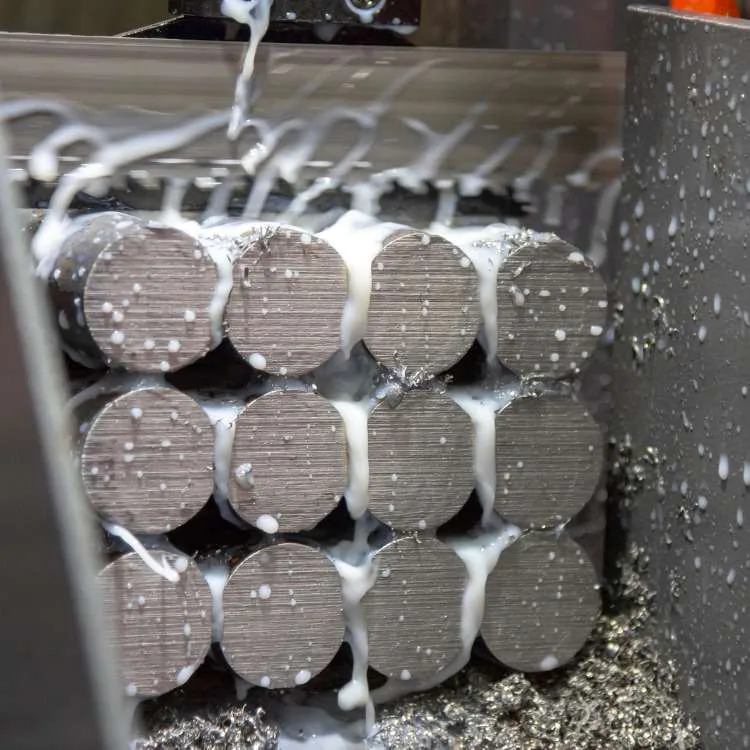
Five practices at a glance
This checklist focuses on water-miscible CNC coolant. Straight cutting oils are not diluted with water and require different monitoring and maintenance procedures.
Base monitoring schedules and corrective actions on the coolant supplier's limits and test methods, equipment instructions, and facility procedures. Use the safety data sheet and site EHS requirements for handling and exposure controls.
Scroll horizontally to compare all columns.
| Practice | What to check | When to respond |
|---|---|---|
| Level and concentration | Sump level, concentration, test method, water, and additions | Outside the supplier's range or when the record shows unexplained drift |
| Contamination | Surface oil, solids, leaks, dirty return paths, and affected equipment | New or recurring contamination that normal controls do not remove |
| Circulation and filtration | Flow, level, filter loading, leaks, and abnormal operation | At the required service interval or when operating conditions change |
| Condition changes | Appearance, odor, foam, residue, corrosion concerns, and process results | When fluid condition, machining results, or operator symptoms change |
| Sump cleaning | Deposits, restrictions, persistent contamination, and fluid-change requirements | At a condition trigger or required change-out |
1. Monitor sump level and coolant concentration
Establish a baseline for the coolant and process. Record the product, concentration range, test method, water requirements, reservoirs served, and normal appearance.
- Check the sump level. Investigate unexpected loss from leaks, evaporation, return-flow problems, or coolant carried out on parts and chips.
- Measure concentration consistently. Use the supplier's method. For a refractometer, apply the product's correction factor, the multiplier used to estimate concentration.
- Record additions and changes. Track water, concentrate, top-off mixture, change-outs, and relevant process changes.
- Observe the fluid and process. Record appearance, odor, foam, surface oil, solids, residue, corrosion concerns, and machining changes.
- Include pH or microbial tests when required. Use the supplier's or facility's method, limits, schedule, and corrective action.
Follow the supplier's water-quality, mixing, and top-off instructions. Confirm an out-of-range measurement and review recent additions or operating changes before correcting it. Use odor and appearance to trigger further testing; establish pH and microbial condition with the required test method.
2. Control tramp oil and solids at the source
Start with the source. Check for hydraulic or lubrication leaks, excessive chip carryover, poor guarding, dirty return paths, and practices that introduce incompatible material into the reservoir. Correct recurring sources alongside removal to reduce repeated contamination.
Match the removal method to the contaminant. A surface skimmer collects free oil that rises to the sump surface. A coalescing separator helps small, separable oil droplets combine and separate by gravity. Foreign oil held in a stable chemical emulsion and dissolved contaminants require different treatment.
- Identify recurring sources of oil, chips, fines, or incompatible material.
- Determine whether the problem affects one sump or a shared system.
- Use magnetic separation for ferrous material and paper-bed filtration for suspended particles that the selected filter medium is designed to capture.
- Get help from the fluid supplier or appropriate specialist when contamination cannot be identified or controlled safely.
Individual sumps and shared systems can require different equipment arrangements. The coolant system selection guide compares the available approaches.
3. Keep circulation and filtration working
Restricted return flow, circulation, or filtration can make coolant conditions difficult to control. Compare current operation with the normal condition and investigate meaningful changes before flow is lost.
- Compare visible flow and fluid level with normal operation.
- Check accessible filters, separators, return paths, and connections for loading or leaks.
- Check for bypass that allows fluid to move around the intended filter path.
- Record abnormal loading and investigate its cause when replacing the filter medium.
Follow the equipment manufacturer's required service intervals. Use flow, level, filter or separator loading, differential pressure when provided, leaks, and abnormal operation to determine whether service is needed sooner. Rapid loading can indicate a process change or contaminant source.
Work safely. Keep guards in place and do not open pressurized housings, reach into moving equipment, or service energized equipment. Follow the equipment instructions and facility lockout procedures before maintenance. Follow the safety data sheet and facility procedures for mist and splash control, hygiene, spill response, and personal protective equipment. Report skin or respiratory symptoms through the facility's health and safety process.
4. Record and investigate changes
Odor, persistent foam, surface oil, staining, residue, poor flow, unusual tool wear, and finish changes can indicate a coolant or process problem. Use each symptom as a starting point for investigation and confirm the cause with the relevant checks.
- Record the symptom, when it appeared, and what changed beforehand.
- Determine whether one machine or a shared system is affected.
- Verify the fluid level, concentration method, recent additions, visible contamination, flow, filtration condition, and known leaks.
- Involve the fluid supplier, maintenance team, production or machining team, or equipment manufacturer when the cause remains unclear.
Use the coolant odor diagnostic guide for odor-specific checks. The CNC coolant management guide covers concentration, contamination, condition monitoring, and change-out decisions in greater detail.
Add biocides, defoamers, corrosion-control products, or other chemicals only with coolant-supplier direction and facility approval. An unapproved correction can create compatibility, safety, or process problems.
5. Clean the sump and handle removed fluid properly
Online skimming and filtration cannot remove every settled deposit or reach every internal area. Clean the sump when sludge, solids, residue, or persistent contamination cannot be controlled during operation, or when the required fluid-change procedure includes reservoir cleaning.
- Confirm the condition or procedure that triggered the work.
- Plan the required machine isolation, safe access, and cleaning tasks before work begins.
- Decide how recovered coolant, tramp oil, solids, filter media, and cleaning residue will be evaluated, stored, reused, recycled, or disposed of.
- Record whether the coolant will be treated, returned, or removed from service.
- After cleaning, inspect the sump and complete the required restart checks.
Waste status depends on the fluid and contaminants present. Follow the facility's procedure and applicable federal, state, and local requirements. Complete the required waste determination before classifying spent coolant as hazardous or non-hazardous.
A portable sump-cleaning system can remove coolant and settled solids from accessible areas. Before returning recovered coolant to service, confirm its condition against the fluid supplier's limits and your facility's procedures.